I baked a custard cake earlier today and the number of photos overwhelmed me. So, I decided to create a separate “how to” entry for caramelizing sugar. After all, I will most likely refer to this process occasionally in the future as my repertoire of baking projects multiply. A how to caramelize sugar article will save me the trouble of having to photograph the caramelizing stage every time a baking project requires it.

Why do we caramelize sugar? For many reasons. Pasty chefs use hardened caramel to create pretty things for decorating. The hot caramel is shaped and swirled before it hardens and the result often goes on top of cakes and desserts. Caramelized sugar is also the traditional glazing for leche flan (although I have tried using molasses and it works too).
There are only two things you need for caramelizing sugar — water and sugar. The ratio between water and sugar depends on how thin or how thick you want the resulting caramel to be. I know some cooks who simply melt sugar without any water but sugar burns too fast that way.
For purposes of this entry, the caramel we are creating is of the consistency we need for glazing leche flan.

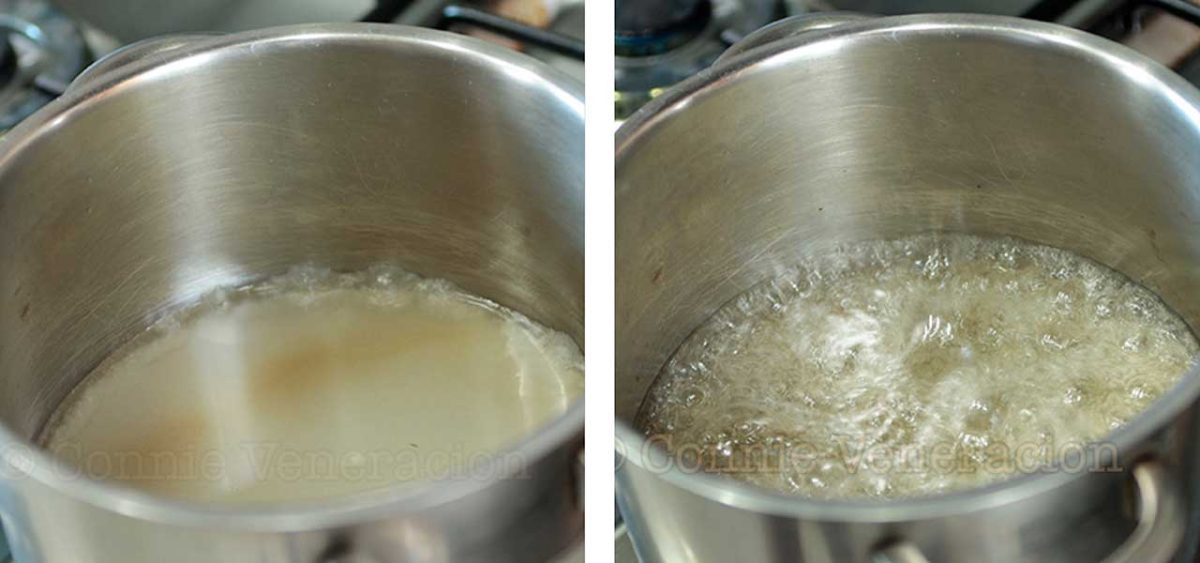
First, place the sugar and water in a thick bottomed pan. For about half a cup of caramel, use 1 cup of white sugar and 1/4 cup of water. Just place them in the pan — don’t stir.

Turn the heat to high and bring the water and sugar to the boil without stirring. Then, lower the heat to medium-high and continue boiling.
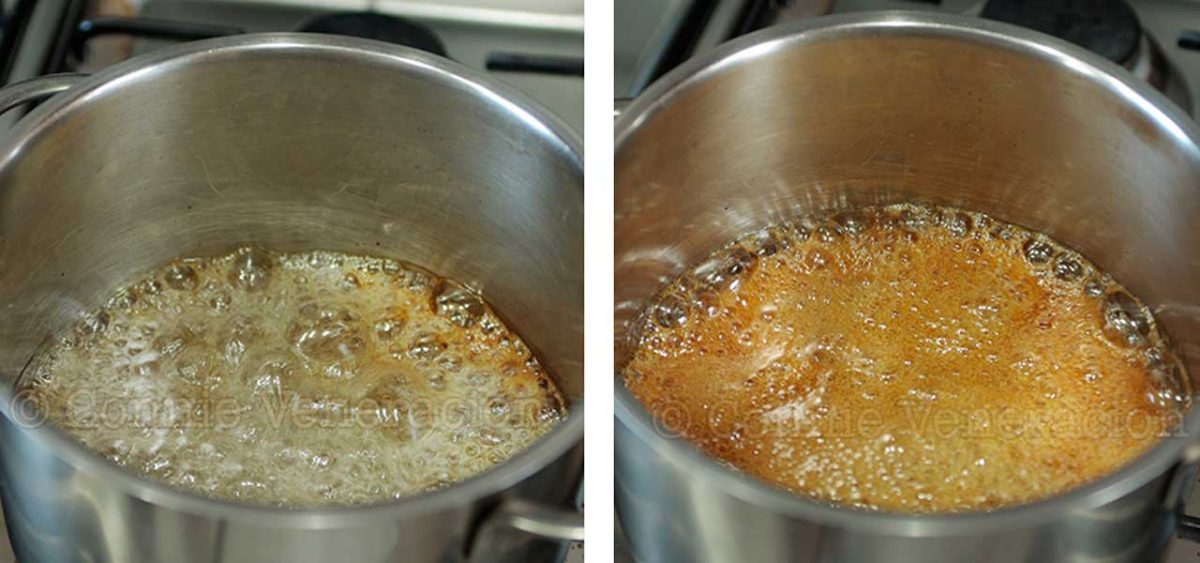
After about 8 minutes, the mixture will start to brown. If the mixture along the edges of the pan brown much faster, swirl the pan to even out the coloring.

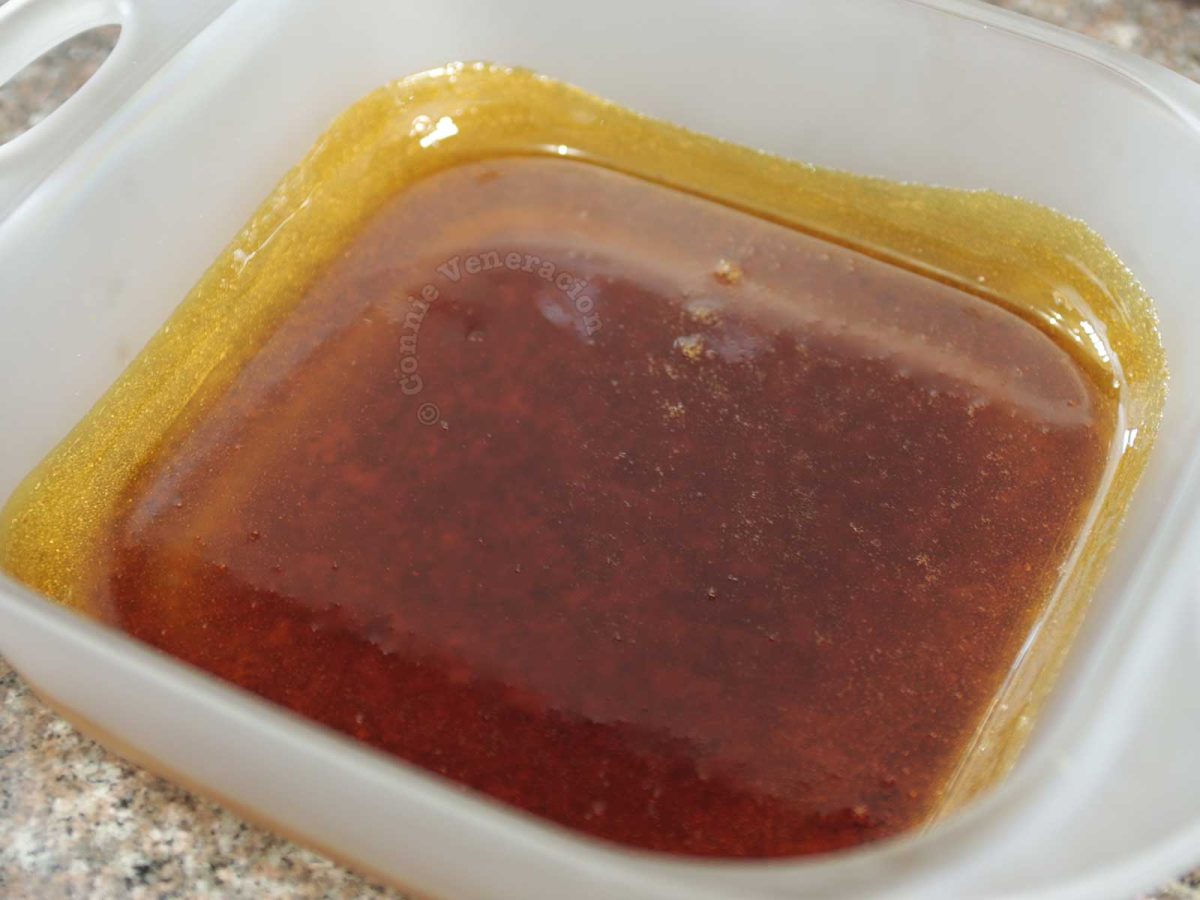
Continue boiling until the liquid is the color of amber.
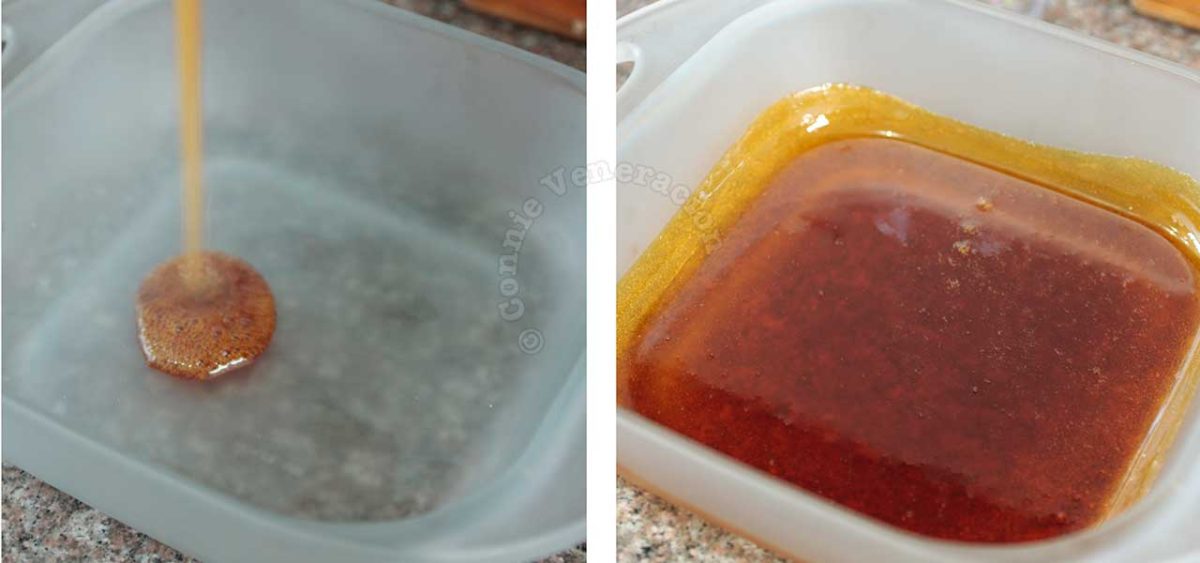
The caramelized sugar is of perfect pouring consistency at this stage. Use it at once. If you’re glazing leche flan with it, pour it into the mold immediately. Caramelized sugar hardens fast — within a minute, you will no longer be able to pour it. You can’t keep it on the stove either, even over very low heat, because if you continue to subject it to heat, it will go on cooking and turn dark. And a few seconds after that? That’s called burnt sugar already.
So, next time, I’ll show you my most sinful custard cake. Sinful? Yeah. The custard is thicker than the cake.


i’m excited for your custard cake recipe!
Hehehe Monday, around noon, Manila time. So many pics to resize and I really want to choose the best ones.
i was planning to make this yesterday but after reading this post i decided to just wait for your recipe. When you said it was sinful, my mouth started watering.
Hi.. thanks for the recipe, I try to make my perfect custard cake for my family, everything is perfect, (the cake, the custard) except the caramel, I used medium brown sugar, but the color on top of the custard didnt come cristal brown.. it looks like pail (as if i used white sugar).
Please tell me what should i try?
Thanks,
I used white sugar. But there’s really no harm in using brown. In fact, using brown sugar will give you a darker colored caramel. If yours was pale, it means it should have been boiled a little longer.
ah! so that’s why my caramel failed before. I kept stirring it crystalized.
Thanks for being specific not to stir.
what’s the size of the pan that you used? tnx
Why is that relevant?
i read somewhere that adding corn syrup, citrus juice, or a dash of vinegar (very little as to not affect the flavor of your caramelized sugar) prevents the syrup from hardening. not sure though, just wanted to share.
Hi I know this is an old entry so I’m crossing my fingers you’ll see my post
Wondering about pouring in the custard (as in your custard cake) or milk mixture (for lecheflan): Must I wait for the caramel to harden before pouring? I’m always afraid that I’ll “disturb” the caramel and have custard/lecheflan with a caramel “slice” in the center.
This hasn’t happened with my leche flan attempt but I just credited that to luck.
No. No need for the caramel to harden. Just don’t stir after pouring in the custard mixture.
Thanks! I off to the kitchen!…
You are a god send. I have tried several recipes before and my sugar always crystallizes, stirring was the problem. Thank you so much you are wonderful.
Hi, Ms. Connie, this is Zaike. I just would like to ask, is it okay to caramelize the sugar directly in the moulding pan? Does is make any difference? Thanks
Aluminum molds are too thin and sugar burns fast.
why do some people add butter? and would “oleo” work instead?
I am caramelizing cacao beans…wondered about the different preparations.
Hi Ms. Connie, just want to ask if its ok to pour it to plastic puto mold, im worried that it might melt the plastic?
Thanks
Ah I have no idea. I only used puto molds for puto. In the steamer too, not the oven.
The chef that saved christmas! I was struggling with caramelizing sugar– one recipe says stir sometimes, others say I shouldn’t use water. I must’ve tried 4 or 5 recipes before this and this was PERFECT!
That is good to know. I’m no chef though, just a home cook.
WOW!!! You saved my bum…been trying to melt sugar just on stove for the last 3 hours…this works like magic!! Thanks so much!!!
THank you for help. I am 14 years old and wanted to make chocolates for frienship day but i didnt knw about caramelizing sugar . thanks for your help.
Hi, thank you so much for this.
I have a beautiful recipe for a butterscotch mud cake with caramel ganache, but the instructions for making the caramel would not work.
It took ages (20+mins) to start going brown, but it did and it was WONDERFUL.
Thank you so much for this!